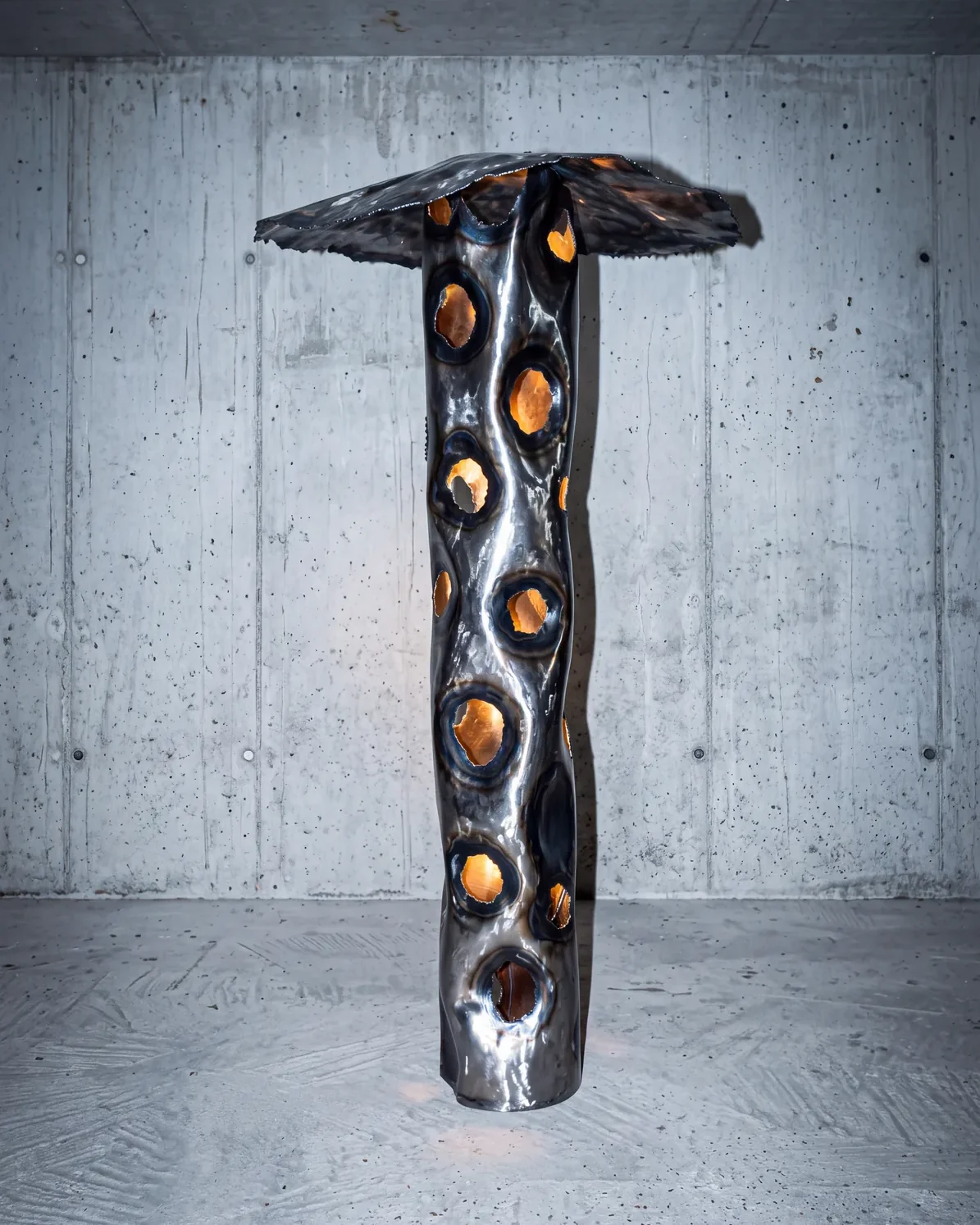
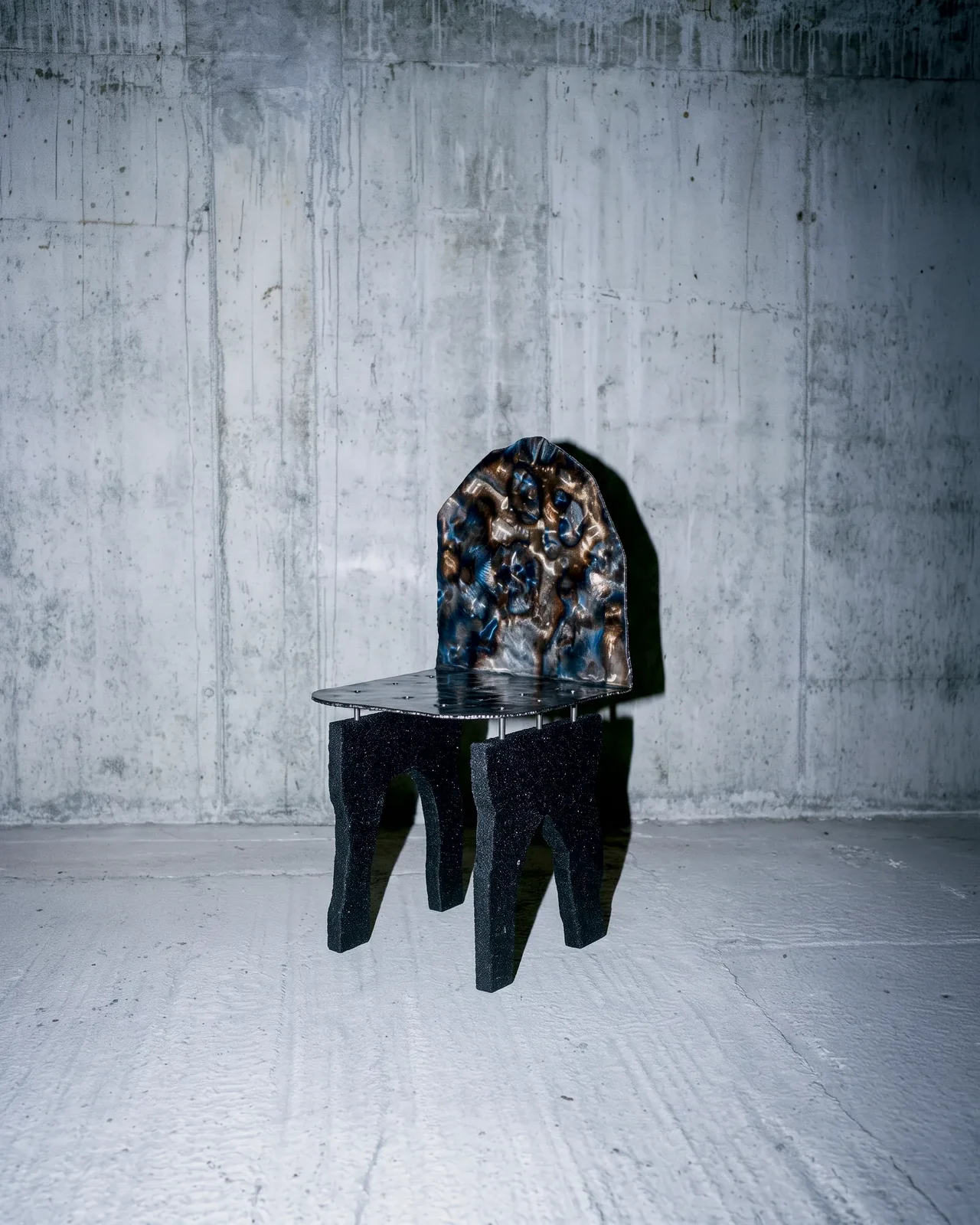
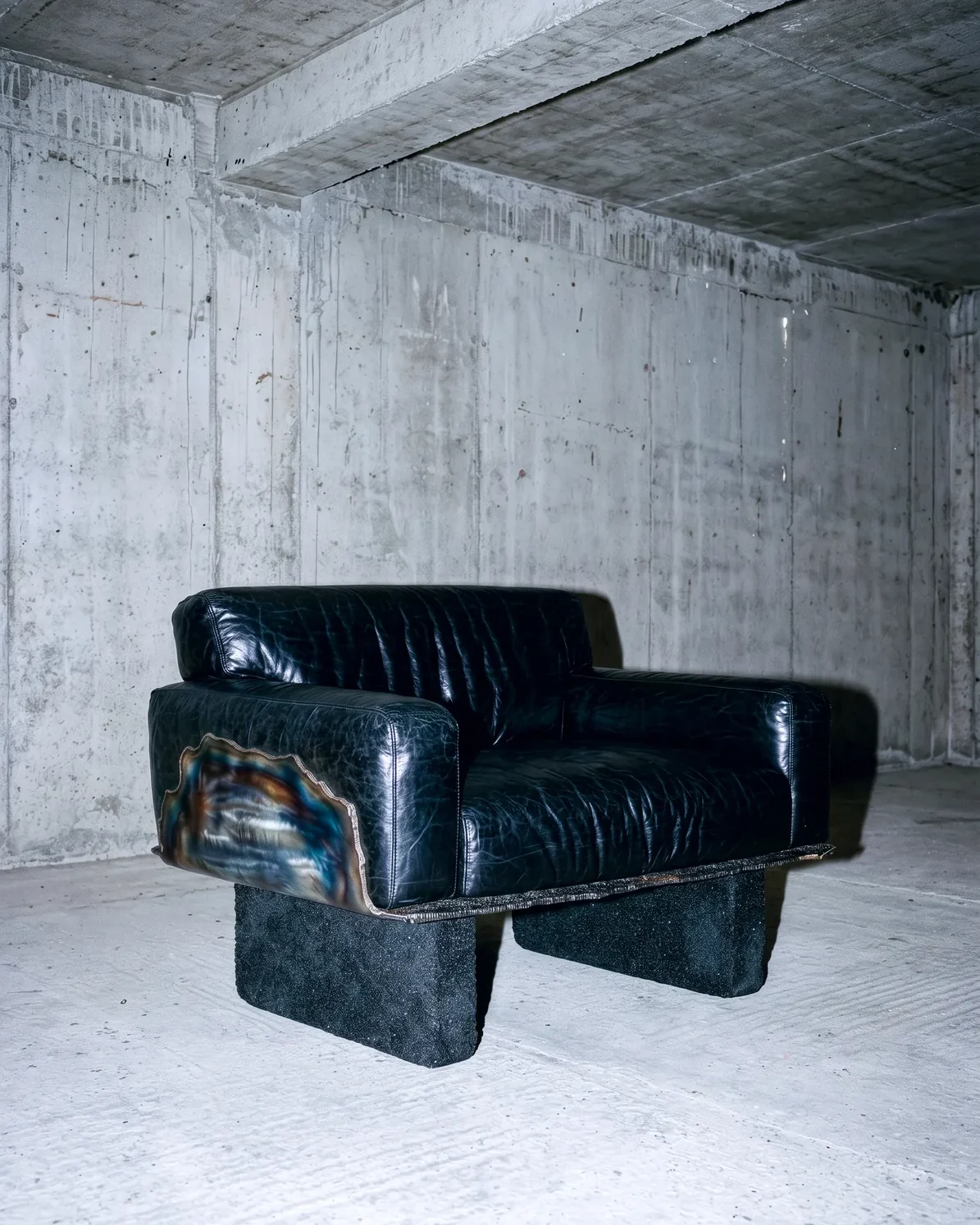
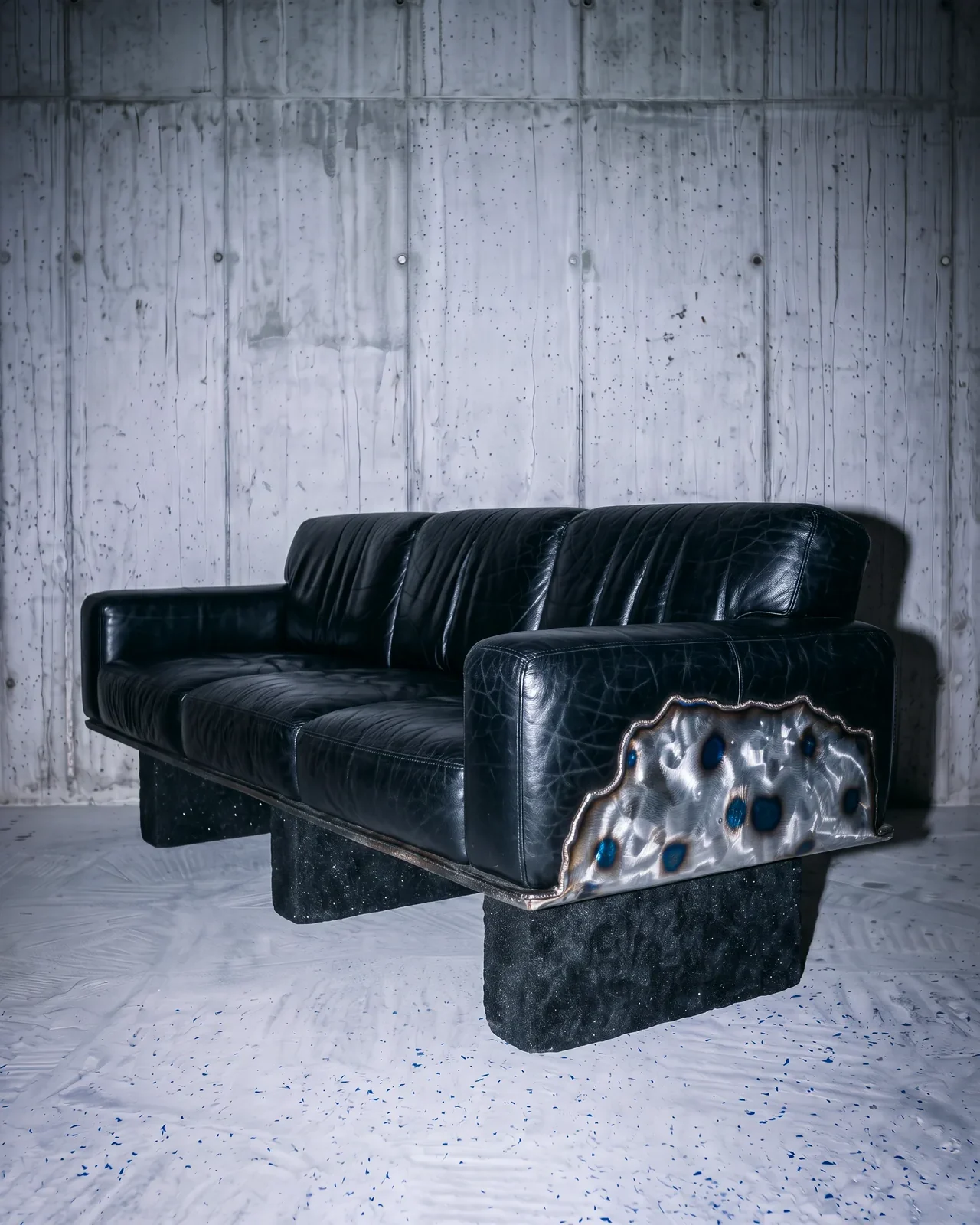
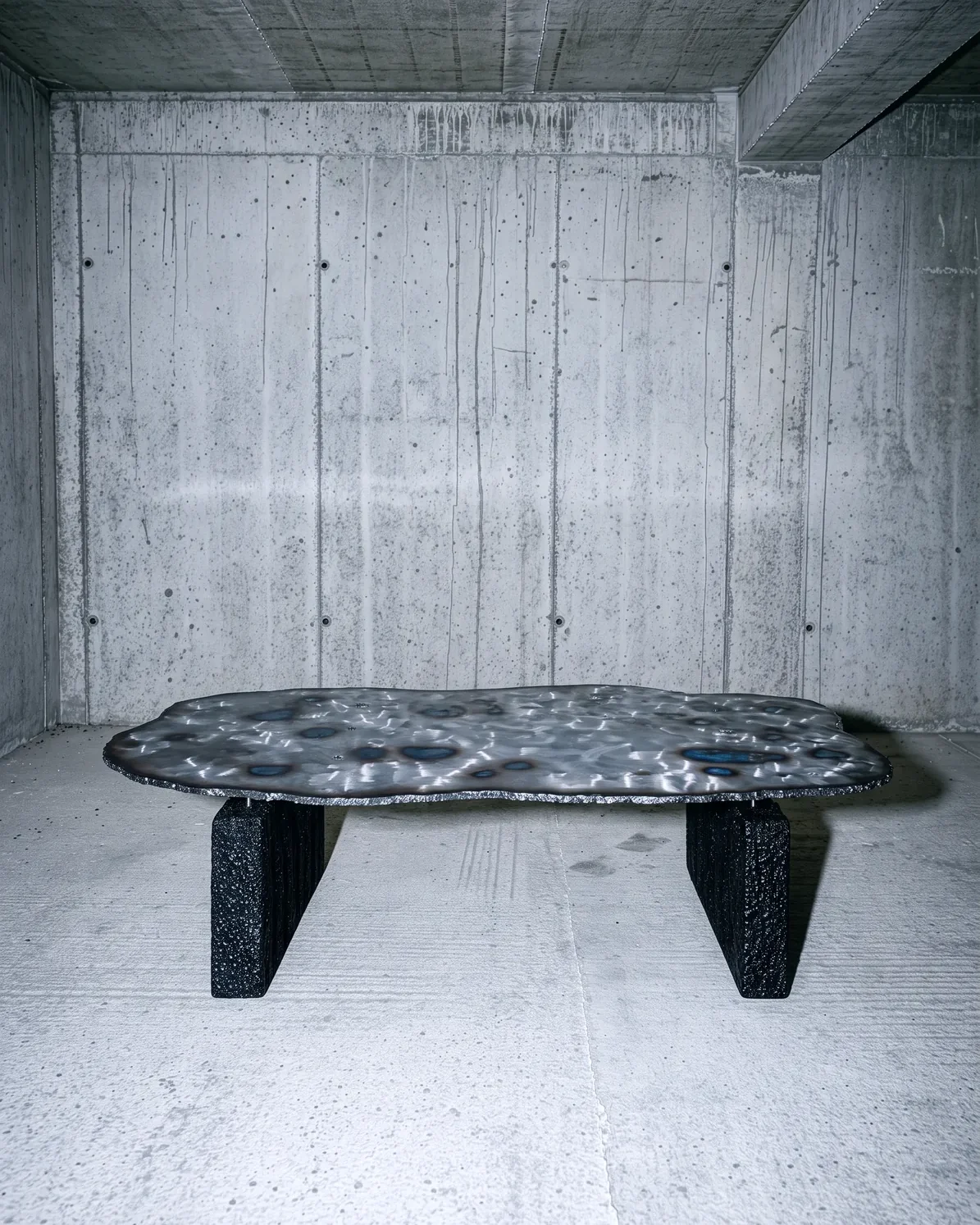
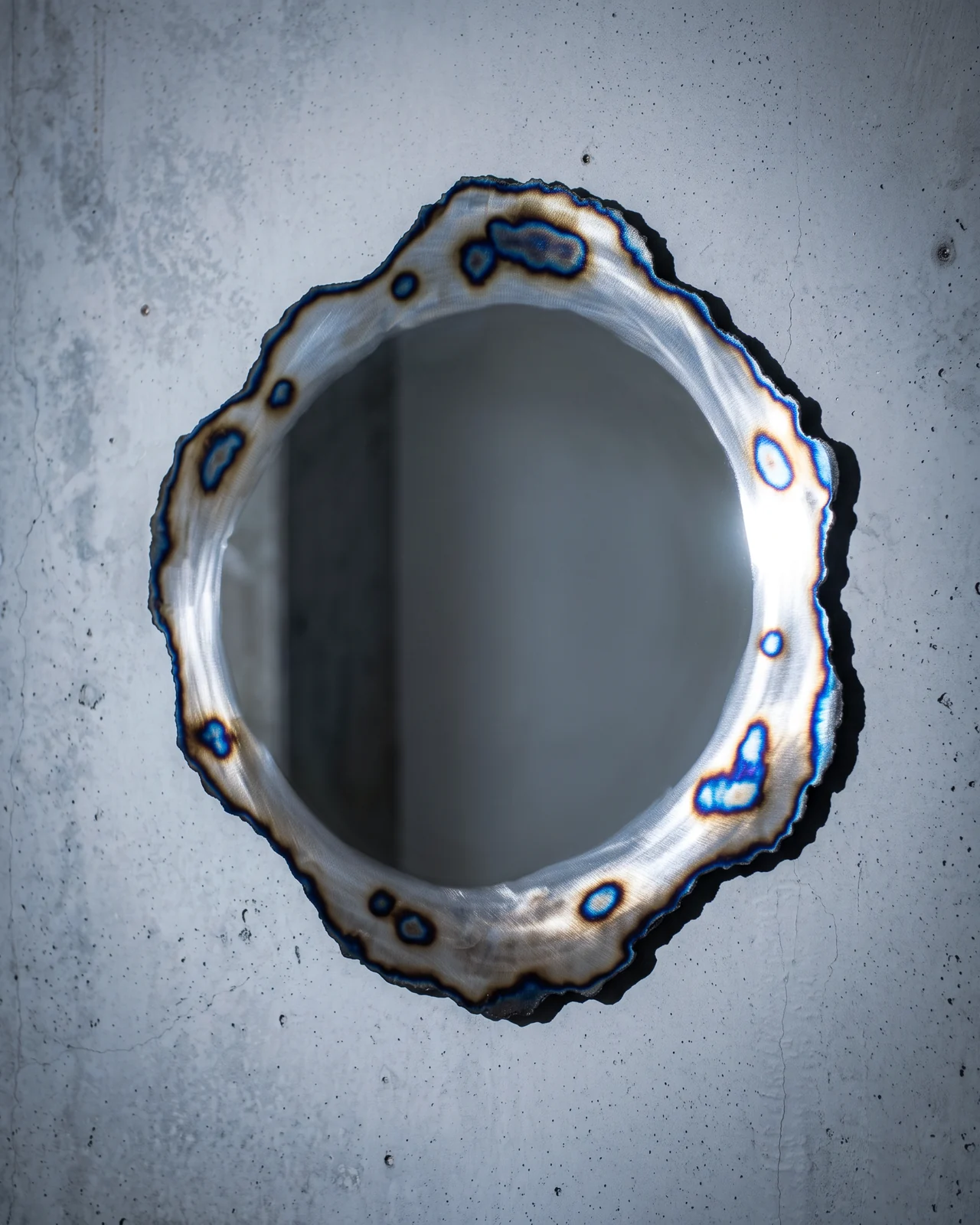
Ustio takes its name from the Latin ustio, the act of burning. Not as metaphor, but as method. Each piece is the direct result of fire applied to steel: plasma-cut edges left raw and open, controlled heat that oxidises the surface, chromatic shifts of blue, violet and amber that emerge from thermal stress and cannot be replicated. The marks are not applied. They are produced.
The steel records what it has endured. Weld lines remain visible, cut edges are left unfinished, and nothing is corrected after the fact. Each piece rests on bases cast from a mineral composite of sand, ash and reclaimed construction debris. Metal and mineral are kept apart, connected only by slender steel rods: a structure held at the edge of collapse.
Ustio does not pursue refinement. It pursues consequence.